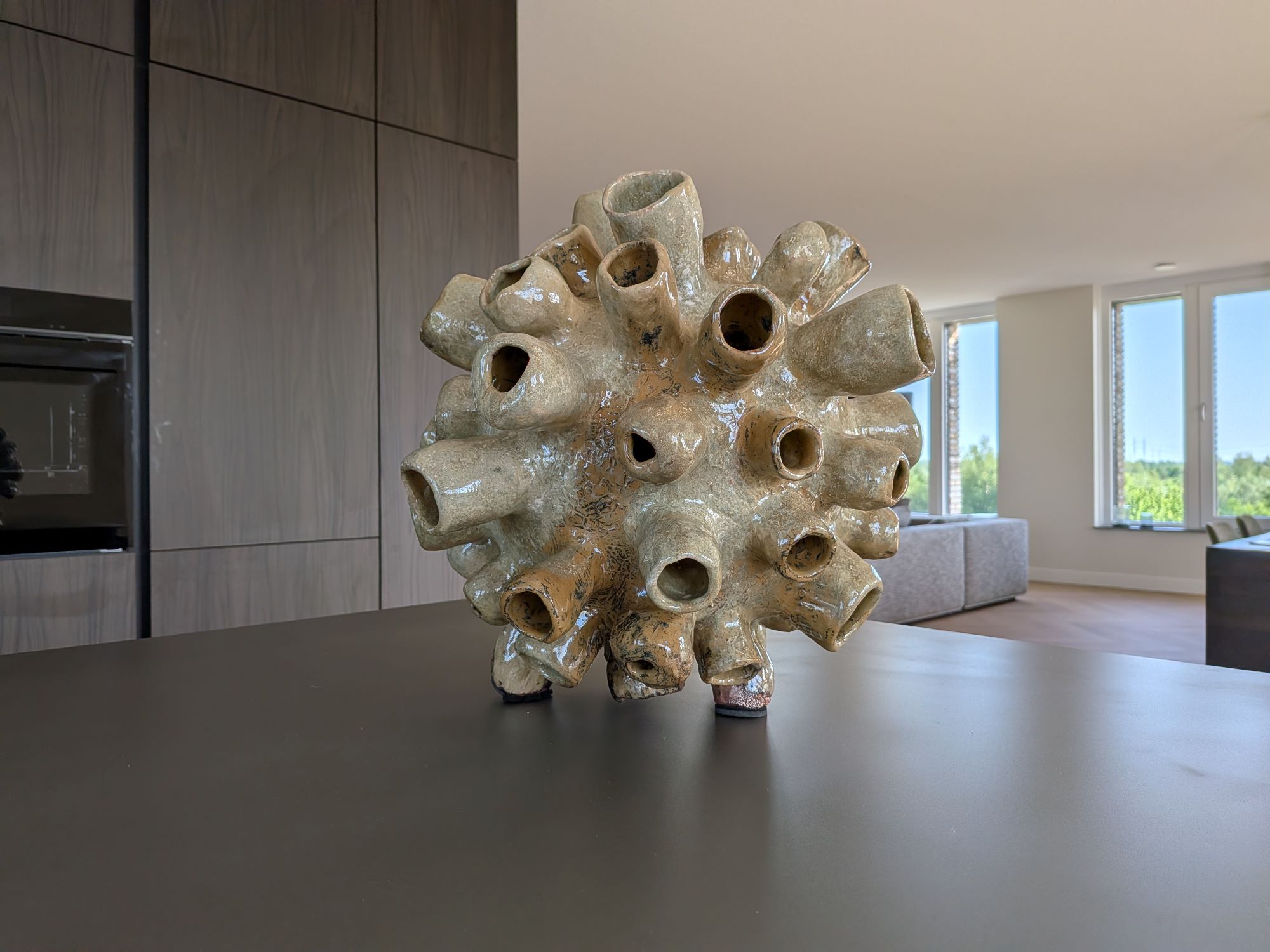
COVID is a large-scale ceramic sculpture weighing approximately 20 kilograms. Inspired by the now-iconic image of the coronavirus, the piece is not intended as a scientific representation but as an artistic interpretation shaped by memory, emotion, and reflection. Transformed into stoneware, the virus is rendered as a permanent physical presence—a ceramic reminder of a period that profoundly affected lives across the world. The sculpture invites contemplation on vulnerability, resilience, and the lasting imprint of collective experience. Part monument, part artifact, COVID stands as a sculptural reflection on a moment in history that continues to shape our understanding of connection, isolation, and the passage of time.
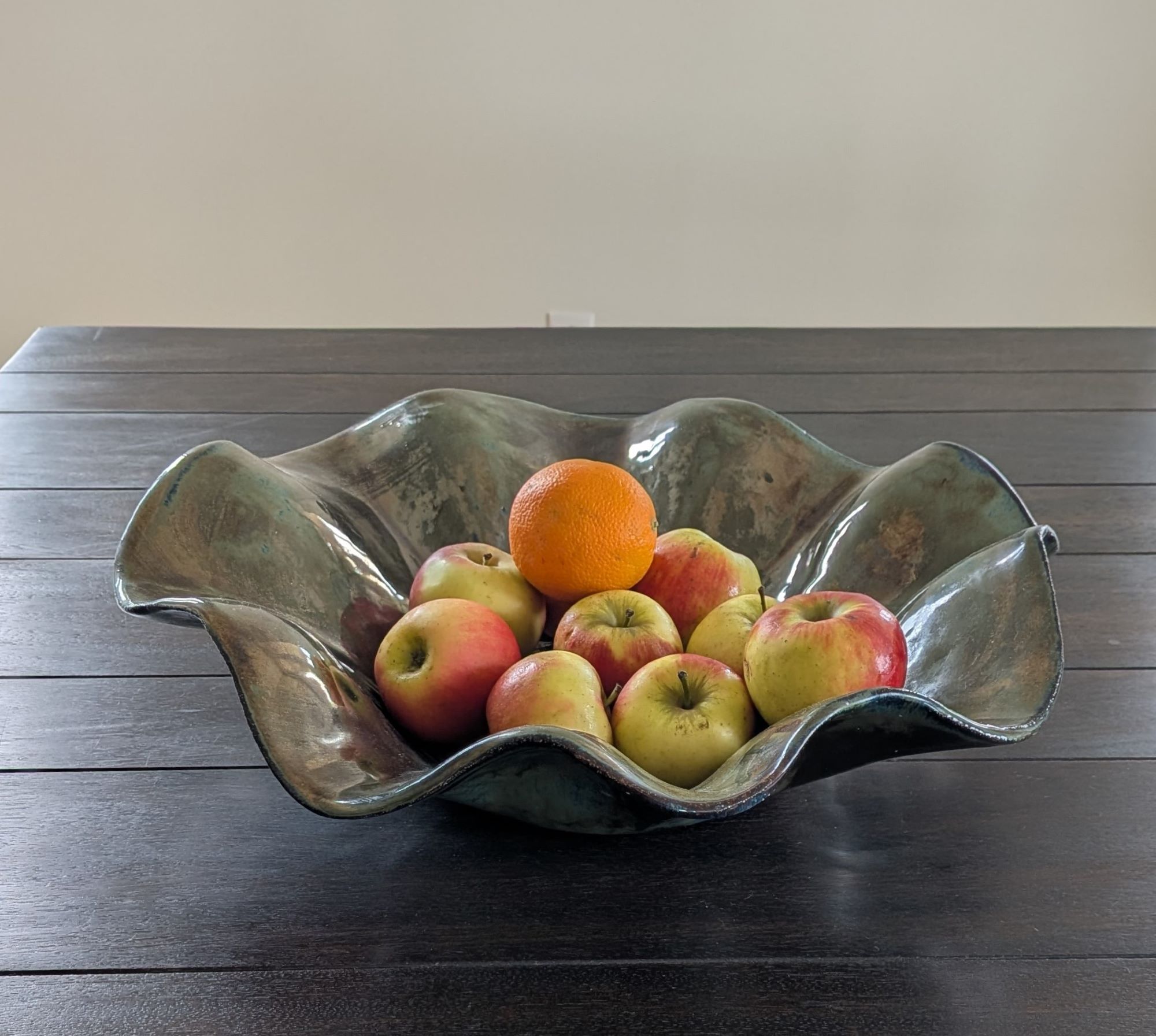
This large ceramic fruit bowl, measuring nearly 50 cm in diameter, is shaped by flowing, wave-like contours that create a sense of movement and balance. Its organic form draws inspiration from natural rhythms and fluid landscapes, transforming a functional object into a sculptural centerpiece. Handcrafted in stoneware and finished with carefully selected glazes, the bowl celebrates the interplay of form, texture, and utility. Whether filled with fruit or displayed on its own, it brings a quiet, natural elegance to any space.
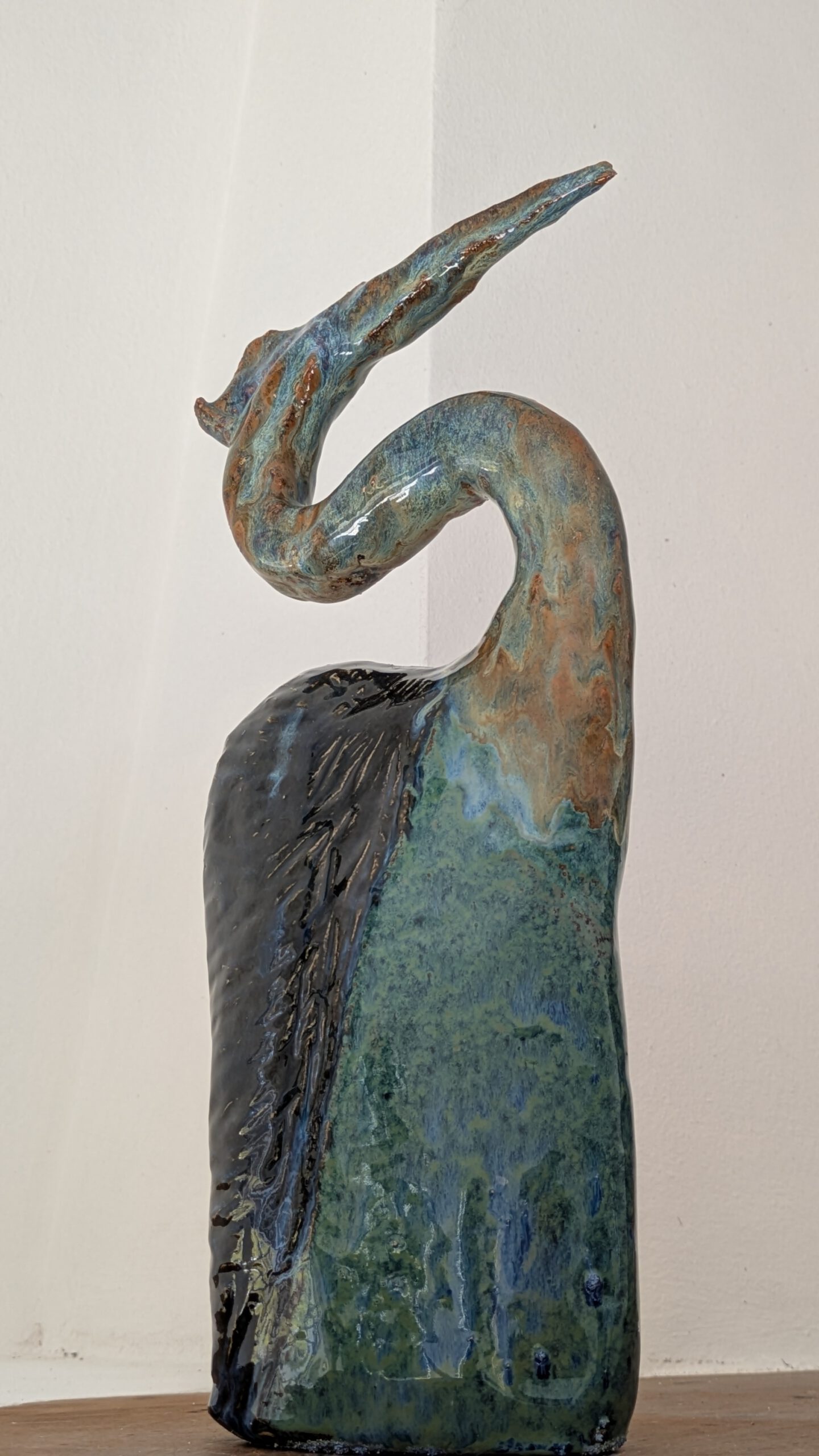
Inspired by the heron’s contemplative stance, this sculpture evokes the quiet tension of a bird standing motionless, waiting and observing. The work is not a direct depiction, but an interpretation of the heron’s grace, patience, and connection to its environment. Through organic forms and a restrained presence, Echo of the Heron becomes a reflection on stillness, attention, and the beauty of unhurried moments.